Introduction
In our daily practice in Paphos, we frequently meet patients going through a deeply frustrating and anxiety-inducing experience: feeling a sharp, sudden pain in a tooth, booking an appointment, undergoing an X-ray, and being told that “everything looks fine” with no visible cavities or infections. This apparent normal result creates significant worry because the pain keeps recurring unpredictably, disrupting daily chewing and peace of mind.
The reality is that some dental lesions are so minute and insidious that they completely slip past superficial examinations and traditional X-ray screenings. In this article, we closely examine invisible cracked tooth syndrome, exploring its underlying causes, the misleading symptoms that should never be ignored, and the modern diagnostic technologies that allow us to detect these fractures before they permanently compromise your oral health.
The Threat of the Invisible Enemy in Your Mouth
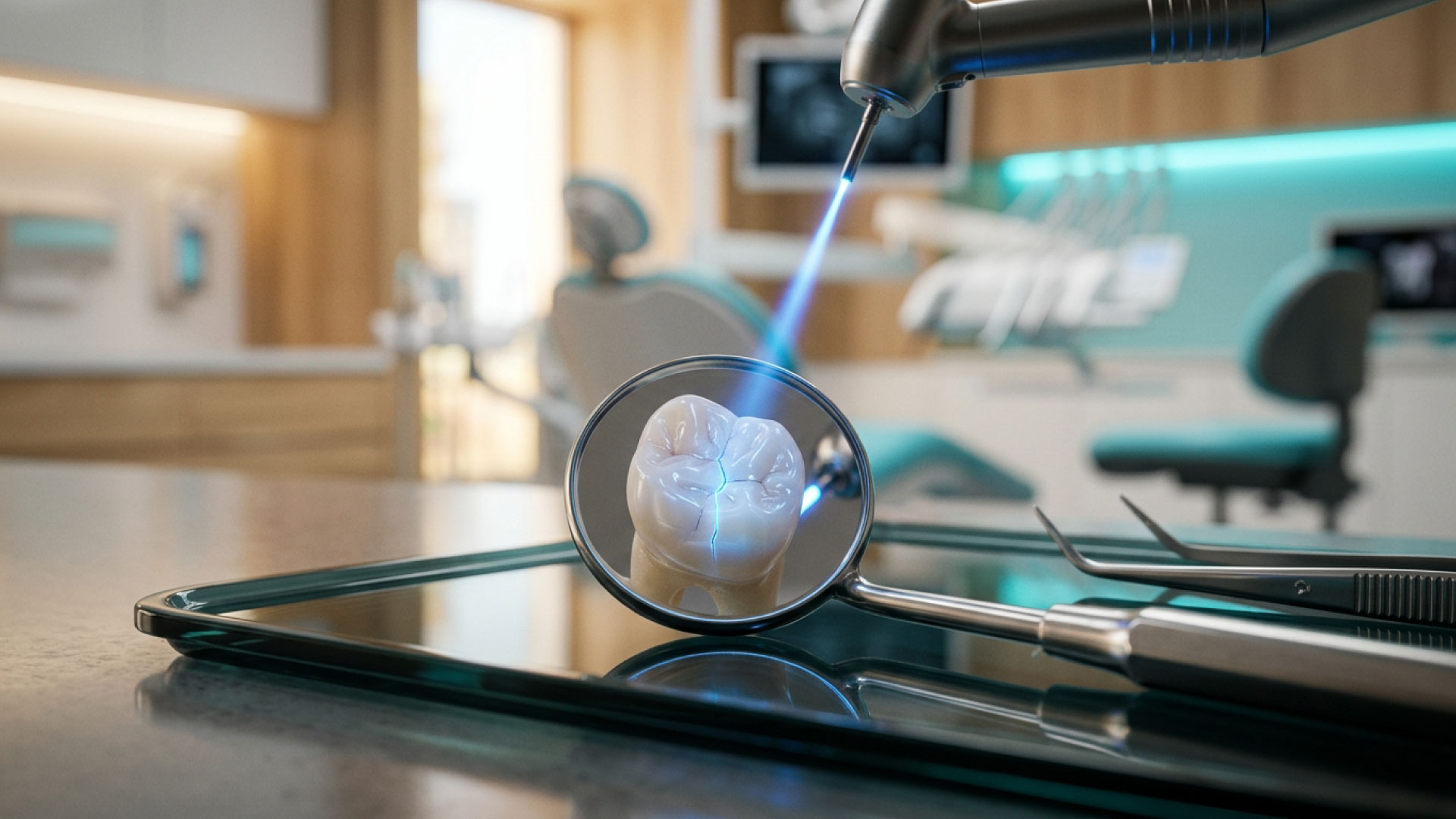
There is a silent threat that can compromise the health and structural integrity of our teeth without showing any obvious external signs: the presence of an invisible cracked tooth. In our clinical practice in Paphos, we frequently see individuals exhausted by an unusual discomfort—an intermittent pain that flares up suddenly and then disappears for days, leaving a constant sense of anxiety and uncertainty. When looking in the mirror, the dental crown appears entirely intact and free of cavities, creating a false sense of security. However, this condition represents one of the most complex challenges in modern dentistry, as an underestimated microfracture can progress deep into the tooth, ultimately splitting the root and leading to irreversible tooth loss.
The Diagnostic Difficulty of Dental Microfractures vs. Cavities
Unlike a traditional cavity, which demineralizes dental tissue and creates a hole clearly visible during both clinical exams and intraoral X-rays, dental microfractures present as microscopic cracks within the enamel and dentin. The X-ray beams of standard two-dimensional radiographs can only detect a crack if it runs parallel to the image plane or if it has already caused bone loss around the root. If the fracture is hidden beneath an old filling or runs in an oblique longitudinal direction, the standard X-ray will appear completely “clean,” creating a sharp contrast between the real pain reported by the patient and the apparent absence of pathology found during a routine checkup.
The Concrete Danger of the Crack's Silent Evolution
Underestimating these warning signs or waiting for the discomfort to pass on its own is the greatest risk one can take when dealing with cracked tooth syndrome. Every time we chew, occlusal forces act on the crown, causing the two sides of the crack to flex slightly. This continuous micromovement acts like a lever, driving the fracture deeper toward the pulp chamber where the blood vessels and nerves reside. Furthermore, the microscopic opening and closing of the crack allows plaque bacteria to invade the inner tooth structure, triggering deep infections, nerve necrosis, or painful abscesses that transform a manageable issue into a surgical emergency.
The Real Causes Behind Cracked Tooth Syndrome
To understand how to prevent and avoid irreparable damage to our teeth, we must analyze the physical and mechanical factors that trigger cracked tooth syndrome. Tooth enamel is the hardest substance in the human body, but it is not indestructible. Abnormal stress, sudden impacts, and internal structural tension can exceed its natural elastic limit. At our dental practice in Paphos, we observe daily how the combination of prolonged chewing stress and pre-existing structural weakness creates the ideal conditions for an invisible cracked tooth to form.
Occlusal Overload, Bruxism, and Continuous Microtrauma
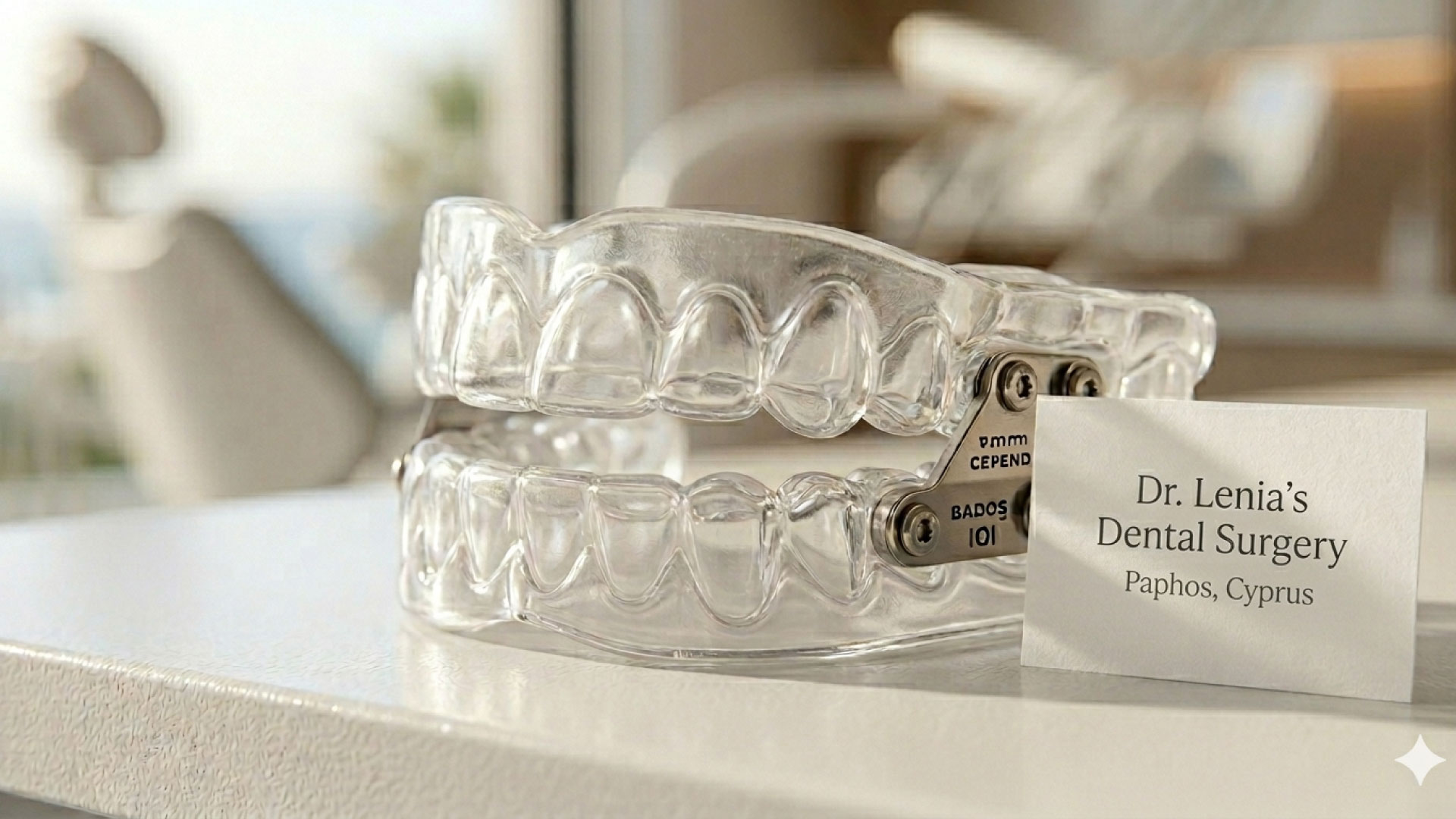
One of the primary causes of dental microfractures is bruxism—the involuntary habit of clenching or grinding teeth, particularly during sleep. Under stress, the forces exerted by the masticatory muscles on tooth surfaces can be up to three times greater than those applied during normal eating. This constant occlusal overload causes mechanical fatigue within the dental tissues: force after force, microscopic cracks develop and propagate vertically. In addition, sudden direct trauma, such as accidentally biting down on an extremely hard food item or an unpopped kernel, can trigger an instant fracture on an already weakened surface.
The Insidious Role of Old Fillings and Thermal Shock
Another critical factor is the presence of large restorations or old silver amalgam fillings. Amalgam and natural tooth structure have significantly different thermal expansion coefficients. When exposed to continuous temperature swings—such as alternating hot beverages with ice-cold food—restorative materials expand and contract at different rates than the surrounding enamel. Over the years, this thermomechanical behavior creates a wedging effect against the walls of the tooth cavity. The crack develops silently beneath the existing restoration, remaining completely hidden from view until it begins to cause noticeable intermittent tooth pain.
The Trap of Intermittent and Misleading Symptoms
What makes an invisible cracked tooth a true puzzle for the patient is the extreme unpredictability of the pain. Unlike a deep cavity or an acute abscess, which generate a constant, throbbing, and easily localized toothache, an enamel fracture produces vague and discontinuous symptoms. This variability leads many people to neglect the issue, mistakenly convincing themselves that the problem has resolved on its own, while in reality the fracture continues its progression toward the dental pulp.
Releasing the Bite: The Tell-Tale Pain Signal
The most characteristic and revealing symptom for an accurate cracked tooth diagnosis is a sharp pain occurring at the exact moment bite pressure is released. When biting down on food, the applied pressure forces the two edges of the microfracture slightly apart. When that pressure is suddenly released, the edges snap back together instantaneously. This sudden motion directly stimulates the nerve endings in the dentin and pulp, triggering a brief but intense sharp pain that serves as the hallmark warning sign of cracked tooth syndrome.
Unpredictable Hypersensitivity to Heat, Cold, and Sweets
In addition to mechanical responses during chewing, a structurally fractured tooth reacts abnormally to chemical and thermal stimuli inside the mouth. Consuming very cold foods, hot drinks, or sugary items can trigger intermittent tooth pain that feels completely disproportionate. The explanation lies in the fact that the crack breaks the enamel’s protective seal, allowing fluids and temperature shifts to reach the dentinal tubules directly and irritate the underlying nerve tissue, resulting in periods of total relief alternating with moments of acute sensitivity.
Advanced Diagnostic Protocols to Unveil the Invisible
Fortunately, modern dentistry provides high-precision investigative tools and protocols that allow us to detect an invisible cracked tooth with certainty, even when traditional X-rays fail. At our practice in Paphos, we never settle for a basic visual check when faced with suspicious symptoms. Instead, we utilize a combination of functional clinical tests and advanced imaging technologies to map the exact path of the fracture and assess the health of deep tissues before initiating treatment.
3D CBCT Imaging and Surgical Microscopy
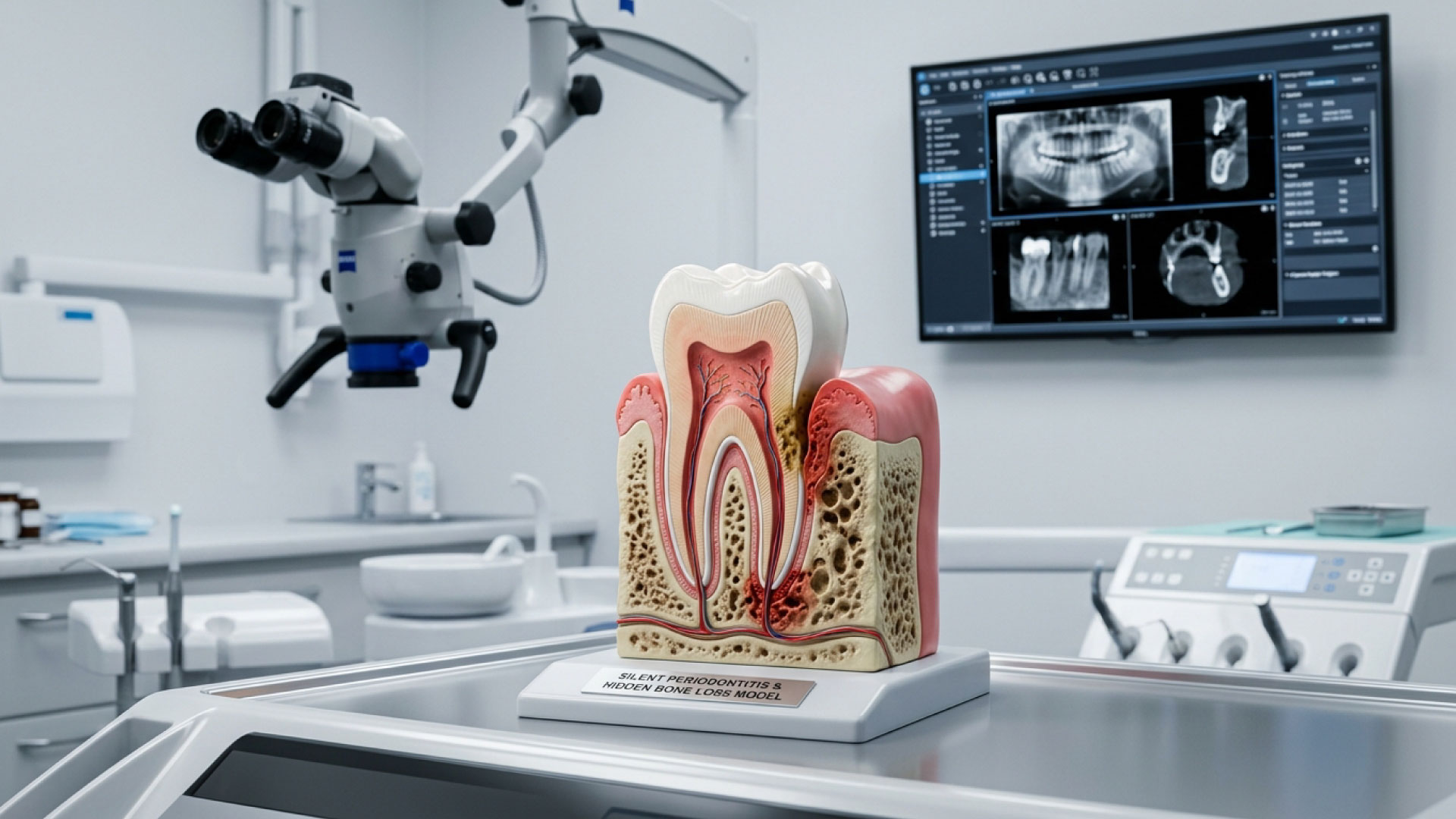
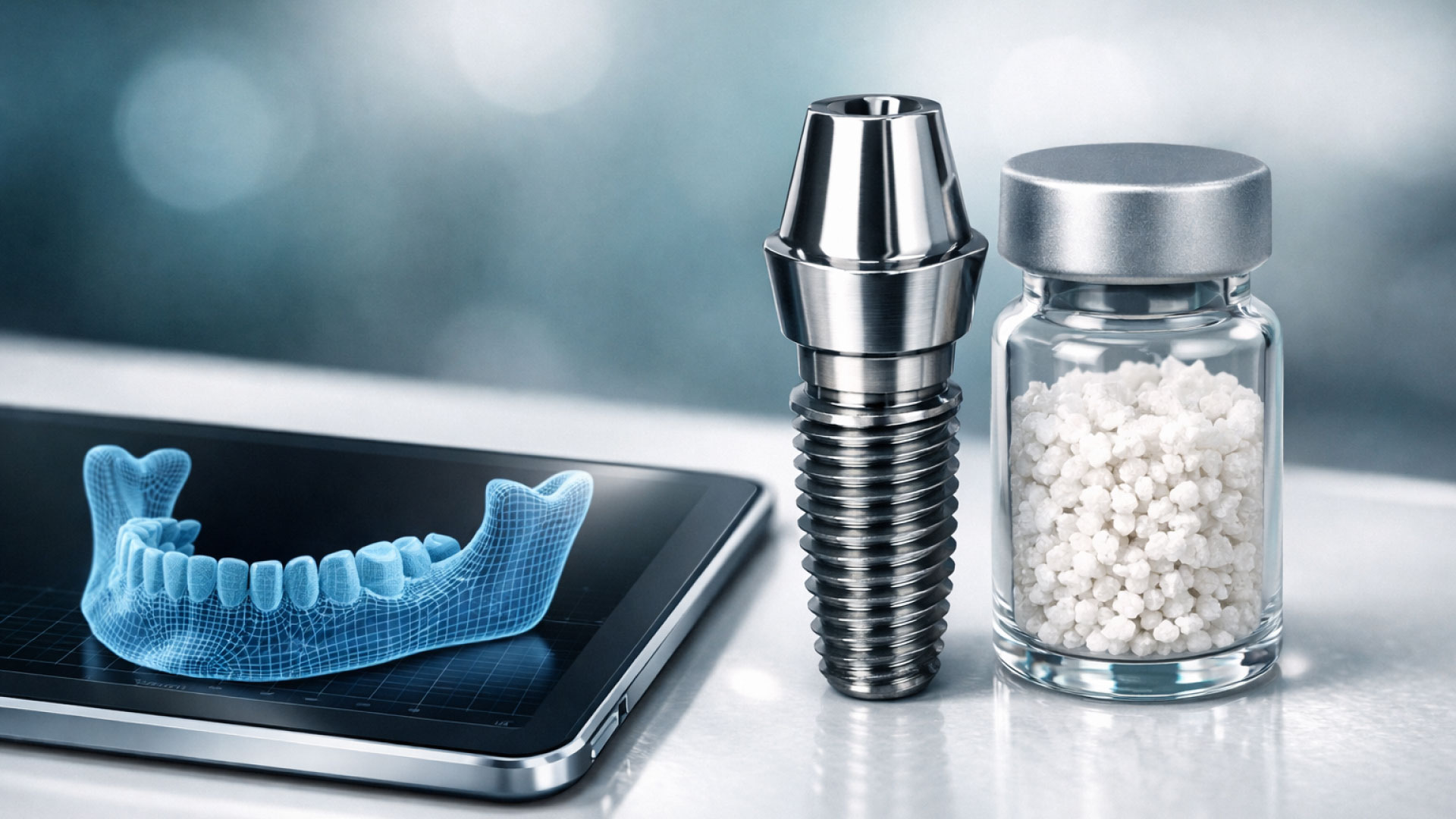
When we suspect that a crack extends deep toward the root or the surrounding jawbone, we utilize Cone Beam Computed Tomography (3D CBCT). This three-dimensional, ultra-low-dose X-ray examination provides a high-resolution volumetric map of the dental arches, enabling us to analyze the roots and detect microscopic bone resorption caused by the fracture. Furthermore, using an operating microscope during the exam allows us to magnify the tooth surface up to 20–30 times, illuminating fissures and deep grooves with the optical clarity necessary to confirm cracked tooth syndrome.
Conservative Treatments and Long-Term Protection
When an invisible cracked tooth is diagnosed in its early stages, the chances of preserving the natural tooth structure and avoiding extraction are exceptionally high. Our clinical philosophy in Paphos prioritizes saving original biological tissue whenever possible, applying targeted treatment protocols designed to stop the crack’s progression, eliminate pain, and restore full chewing functionality safely.
Sealing, Composite Bonding, and Timely Root Canal Therapy
In the early stages, when the fracture is confined to the outer layers and has not compromised nerve vitality, we can intervene by removing the damaged enamel or unstable old fillings. We then perform a direct restoration using high-strength adhesive composite resin, sealing the fissure to prevent bacterial infiltration. If the fracture has extended deeper into the pulp chamber, causing intermittent tooth pain due to nerve inflammation, a timely root canal treatment is necessary. This procedure thoroughly disinfects the root canals and eliminates the infection at its source.
Dental Crowns: Binding the Tooth to Save Your Smile
A root-canaled or severely fractured tooth loses much of its natural elasticity and structural strength, leaving it vulnerable to splitting completely under daily chewing forces. To prevent this outcome, the preferred treatment is capping the tooth with a biocompatible ceramic dental crown. The crown acts like a protective band around the entire tooth, distributing chewing pressure evenly and preventing the crack from expanding further. This approach restores structural stability, full functionality, and a natural, seamless appearance to your smile.
Conclusion
Living with unusual, sudden, or intermittent pain is never something to ignore or dismiss as simple temporary sensitivity. As we have seen, an invisible cracked tooth is a subtle condition that escapes routine checkups, but modern 3D diagnostic protocols and conservative dental techniques allow us to detect and treat it successfully. Taking action before a crack reaches the root is the essential key to saving your natural tooth and preserving long-term oral health.
If you experience a sharp pain when releasing your bite or an unexplained discomfort that comes and goes, do not let time compromise your smile. We welcome you to Dr. Lenia’s Dental Surgery in Paphos, where our team is ready to perform a comprehensive digital diagnostic evaluation and design a safe, tailored treatment path for your needs.